Basic Chemistry
These flashcards introduce foundational chemistry terms, including elements, atoms, and subatomic particles like protons, neutrons, and electrons. Perfect for beginners learning about atomic structure and how to identify parts of an atom using the periodic table.
element
substance that CANNOT be chemically broken down into simpler substances
Key Terms
element
substance that CANNOT be chemically broken down into simpler substances
atom
smallest part of an element that can be identified as that element
nucleus
center, or core, of an atom (where the protons and neutrons are located)
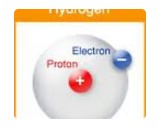
proton
particle that has a positive charge - located in the nucleus of an atom. You can figure out the number of protons by looking at the atomic number o...
neutron
particle that has no charge - located in the nucleus of an atom. You can figure out the number of neutrons by SUBTRACTING the atomic Mass minus the...
electron
particle that has a negative charge - located in rings outside the nucleus of an atom. You can figure out the number of electrons by looking at the...
Related Flashcard Decks
Study Tips
- Press F to enter focus mode for distraction-free studying
- Review cards regularly to improve retention
- Try to recall the answer before flipping the card
- Share this deck with friends to study together
| Term | Definition |
|---|---|
element | substance that CANNOT be chemically broken down into simpler substances |
atom | smallest part of an element that can be identified as that element |
nucleus | center, or core, of an atom (where the protons and neutrons are located) |
proton | particle that has a positive charge - located in the nucleus of an atom. You can figure out the number of protons by looking at the atomic number of an element. |
neutron | particle that has no charge - located in the nucleus of an atom. You can figure out the number of neutrons by SUBTRACTING the atomic Mass minus the atomic number. |
electron | particle that has a negative charge - located in rings outside the nucleus of an atom. You can figure out the number of electrons by looking at the atomic number of an element. |
atomic number | number of protons in the nucleus of an atom. This is the same number as the number of electrons |
atomic mass | total mass of the protons and neutrons in an atom |
energy level | place in an electron cloud where an electron is most likely to be found - rings. Remember, 2-8-18-32. |
metal | element that has the property of shiny luster, ductility, and malleability |
luster | the way a material reflects light |
malleable | able to be hammered into different shapes |
ductile | able to be drawn into thin wires |
nonmetal | element that lacks most of the properties of a metal, is not shiny, does not conduct electricity or heat well, is not malleable so it is called brittle or breakable. |
halogens | elements that make up Group 17 in the periodic table |
noble gases | elements that make up Group 18 in the periodic table |
matter | anything that has mass and takes up space |
properties | characteristics used to describe an object |
state of matter | any of the four physical forms of matter |
solid | state of matter with a definite shape and volume |
liquid | state of matter with a definite volume but no definite shape |
gas | state of matter that has no definite shape or volume |
plasma | state of matter made up of electrically charged particles - needs high temperatures and high pressure |
chemical formula | way of writing the name of a compound using chemical symbols |
subscript | number written to the lower right of a chemical symbol in a chemical formula |
chemical equation | statement in which chemical formulas are used to describe a chemical reaction |
coefficient | number that shows how many molecules of a substance are involved in a chemical reaction |
chemical reaction | process in which new substances with new chemical and physical properties are formed |
reactant | substance that is changed in a chemical reaction |
product | substance that is formed in a chemical reaction |
molecule | smallest part of a substance that has all the properties of that substance - more than one element, like hydrogen and oxygen make water |
chemical bond | force of attraction that holds atoms together |
freezing | change from a liquid to a solid |
melting | change from a solid to a liquid |
evaporation | change from a liquid to a gas at the surface of the liquid |
condensation | change from a gas to a liquid |
sublimation | change from a solid directly to a gas |
physical change | change that does not produce new substances - melting an ice cube or ripping paper. You can get the ice back and the paper is still paper. |
chemical change: | change that produces new substances - burning wood to make ashes or mixing mentos and coke. You can't get the wood or the mentos back. |